
I had one of those conversations today that reminded me why I love the EOS community.
I was talking with a fellow implementer, Ryan Pusins, who went through EOS Bootcamp with me. I was telling him how much I love working with faith-based companies, the ones where the owners aren’t just running a business but running it through their faith, and where I get to bring my own faith into the session room. It’s a different kind of engagement. There’s an alignment that goes deeper than strategy.
I told him I’d been thinking about how to tie that into a Focus Day in a way that felt authentic, not forced. Something that would resonate with a faith-based leadership team on their own terms.
He suggested a scripture. Exodus 18.
He was right. It was so spot on that I had to sit with it for a minute. And honestly, it became this article. This is exactly the kind of share that makes being part of a community of implementers worth it.
So here’s what I found, and why I think it might be the oldest leadership development case study ever written.
Three thousand years ago, a man was sitting in the desert from sunrise to sundown, personally resolving every dispute among two million people. His father-in-law showed up, watched for one day, and said something that basically became the founding document of organizational design:
“What you are doing is not good.”
That’s Jethro in Exodus 18:17. And honestly? He was doing what a good implementer does.
Moses was brilliant. He was called. He was the right person for the mission. And he had completely made himself the single point of failure for an entire nation.
Sound familiar?
Many founders and CEOs are running their companies the exact same way Moses ran Israel. Every decision flows through them. Every problem lands on their desk. They’re working dawn to dusk, burning out, and convinced that if they just work a little harder, it’ll all come together.
It won’t.
Here’s what Jethro told Moses to do, and why it maps almost perfectly onto what EOS teaches:
1. Get clear on your Core Focus.
Jethro didn’t tell Moses to quit. He told Moses to get ruthlessly focused on what only he could do, representing the people before God, teaching the vision, showing the way. Everything else needed to go.
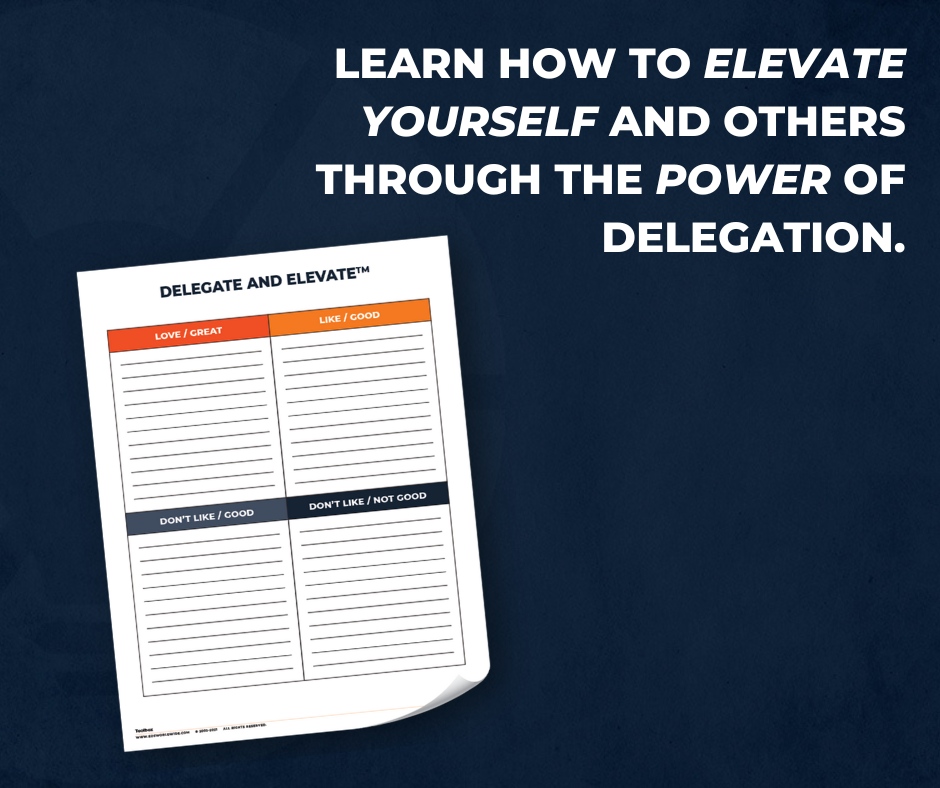
In EOS, we call this your Core Focus. You have a why and a what. When you’re doing anything outside that lane consistently, you’re in the wrong seat for your own company.
2. Build the right structure around the right people.
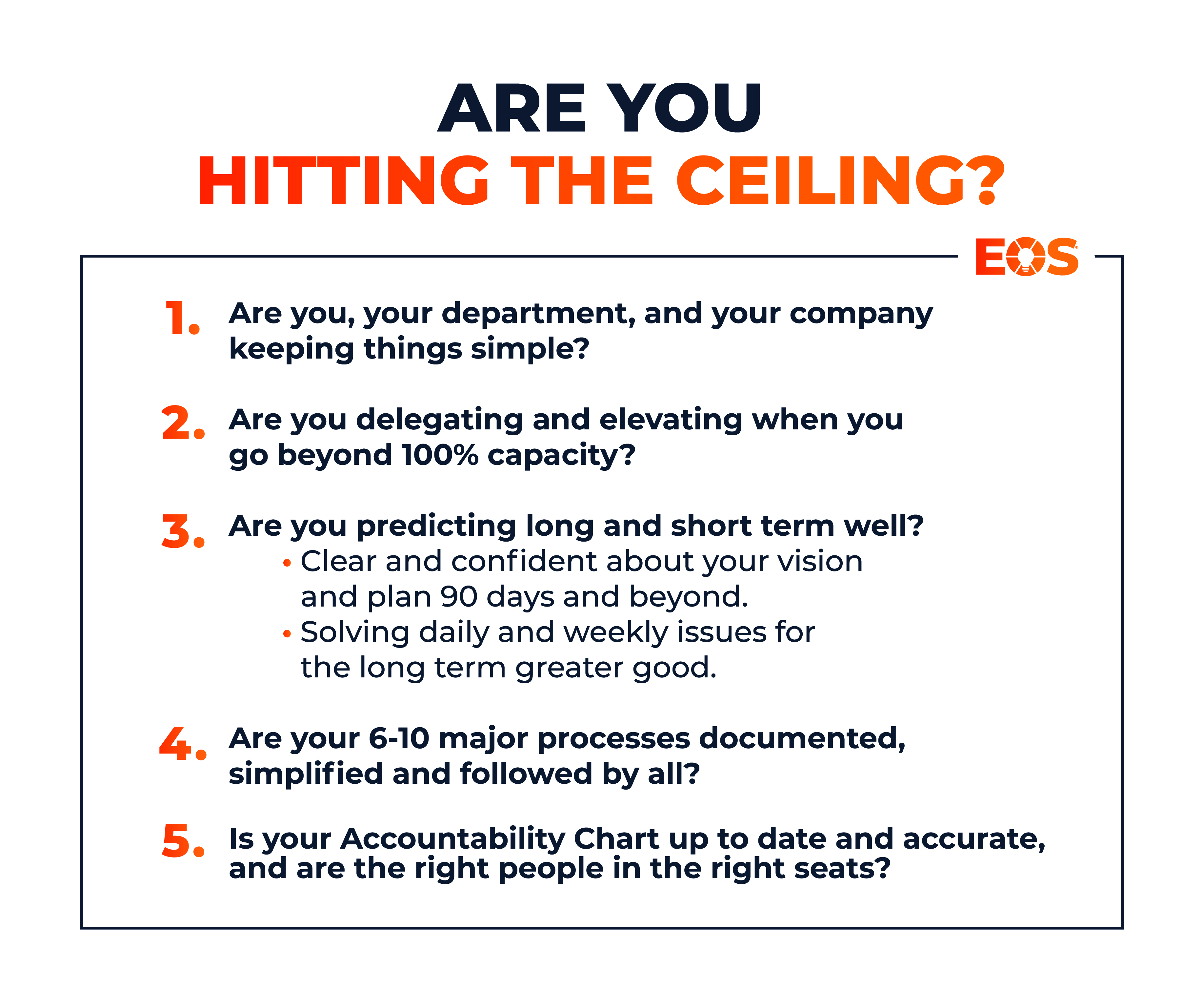
Jethro told Moses to find capable people, people of integrity, and put them in charge of tens, fifties, hundreds, and thousands. He was literally describing an Accountability Chart. Clear roles. Clear levels of authority. Decisions made at the right level, not escalated to the top every time.
The Accountability Chart is one of the first things we build in EOS, and it’s uncomfortable for a lot of visionary leaders because it means letting go. It means someone else owns an outcome. That’s the whole point.
3. Only the hard stuff comes to the top.
Jethro said the simple cases should be handled by the leaders below Moses. Only the difficult ones should make it to him. That’s exactly how a well-run EOS company operates. Your leadership team owns the issues. The ones that genuinely need you? Those come to the table. Everything else gets resolved without you.
4. It can be faster and easier with a Jethro.
It doesn't have to be quite so hard. Moses didn’t figure this out himself. He needed someone outside the situation, someone with objectivity and the trust to tell him the truth, to show him what he couldn’t see.
That’s not weakness. That’s wisdom.
Moses had been leading Israel through miracles and wilderness. He was deep in it. Jethro walked in fresh and saw the dysfunction in one afternoon. The document I was reading on this passage put it perfectly: “At times, a visitor on the scene has a lot more objectivity than the person who’s been on the job for twenty years.”
That’s why outside perspective works. That’s why implementers exist.
I’m not comparing myself to Jethro (the man had range). But the dynamic is real. The founders who make the most progress are the ones who are open to hearing what they can’t see themselves, and then actually doing something about it.
Moses listened. He restructured. He let go. And the work got done, sustainably, by a team built to carry it.
Your business doesn’t need more of you. It needs the right structure, the right people, and you freed up to do the thing only you can do.
That’s not a modern management concept. Apparently, it’s ancient wisdom!
Are you the Moses in your organization right now? I’d love to hear about it in the comments.
About Me
As an EOS® Implementer, I serve as a teacher, coach, and facilitator, helping business leaders transform their companies through the Entrepreneurial Operating System®.
Helping leadership teams gain clarity and Traction isn't just something I do, it's the work I'm built for. And it brings me immense joy to help entrepreneurial companies run a better business and live a better life.